Growing up, my mom would always make roasted chicken for Sunday lunch after church. I suppose it is what her mom did as well. Since my grandparents raised chickens for meat each summer, there was an abundance of whole chickens in the freezer. For this reason, this recipe always gives me a sense of nostalgia in remembering slow, relaxing Sunday afternoons spent around the dinner table eating a whole chicken alongside mashed potatoes.

I originally shared this recipe back in 2023, and today I am updating it with new photos as well as some tips and tricks I’ve learned for making the very best chicken!
It wasn’t until I was an adult that I realized what a wonderful practice this was. Not only does the chicken make a great Sunday meal, but there are also ways to use all parts of the chicken to get multiple meals out of it for later in the week!
How To Spatchcock a Chicken
The most challenging thing about cooking a whole chicken is getting an even cook. Either the breast gets dried out from over-cooking or the thighs are undercooked. Spatchcocking the chicken is the best remedy I have found for the issue.
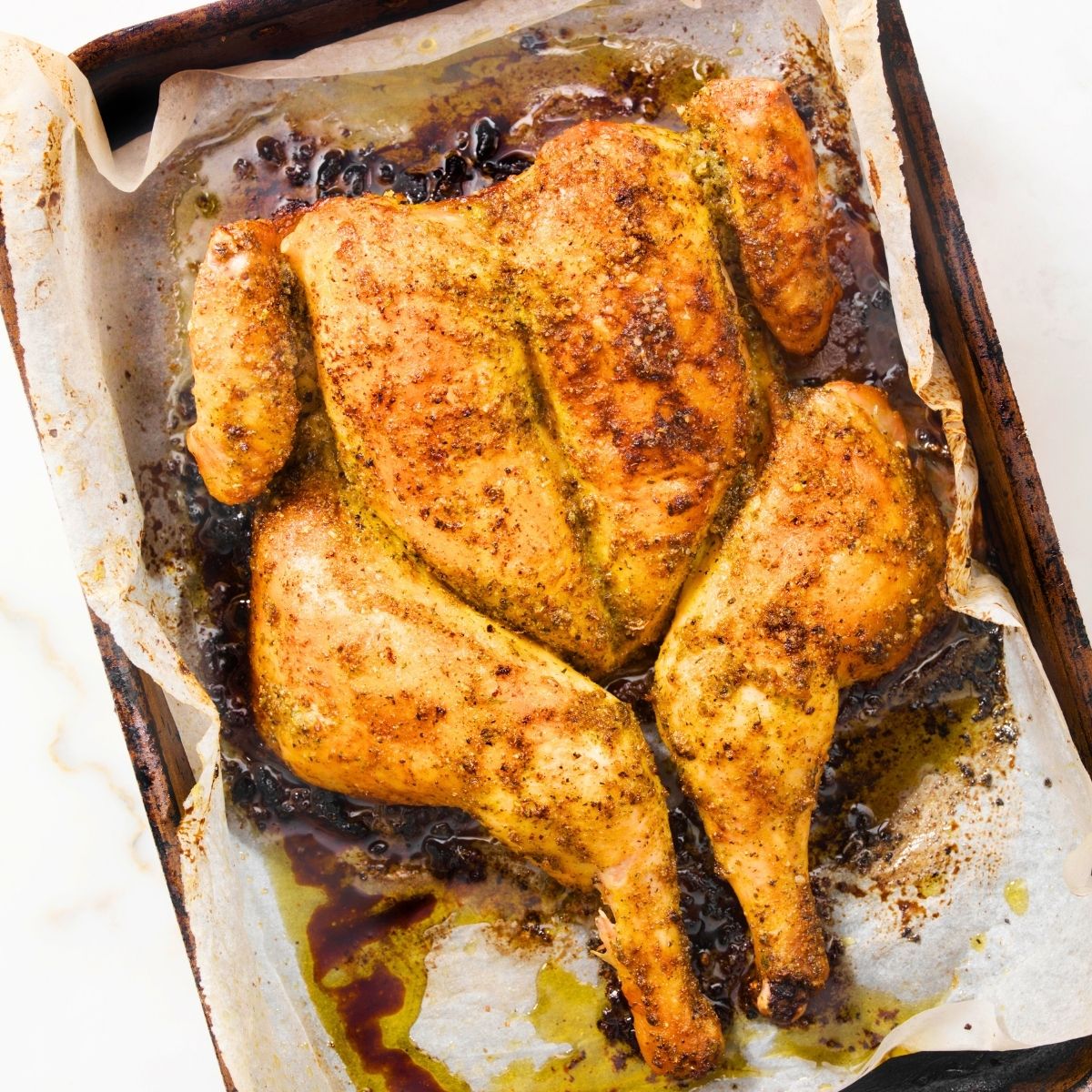
If you’re unfamiliar with it, spatchcocking a chicken simply means removing the back bone. Once the backbone is removed, it allows you to flatten the chicken so that the whole chicken lays flat on the baking sheet and cooks more evenly since every portion is getting a more even heat.
Before we get to the recipe, I will explain how to spatchcock the chicken, but you can skip down if you already know how to do this.
Step One: Place the chicken breast-side down. You should feel the spine on the top side. Cut along both sides of the spine until it is freed from the chicken.
Step Two: Flip the chicken over so the breasts are facing up. Spread the legs out to the sides and press down firmly on the breastbone to flatten the chicken out. You will break some bones in this process.
Step Three: In order to keep the chicken flat on the pan while roasting, cross two skewers across the chicken to form an “X”. This is key to helping the chicken cook evenly. To do this, poke the skewer into the skin of the thigh and run it underneath the skin all the way to the skin of the breast but do not poke into the meat (the skewer should be between the skin and the meat). Repeat this process for the other side. Now you are ready for seasoning!

How To Find Quality Chicken
As with most foods, is best to be able to shake your farmer’s hand. In other words, you want to source your chicken from a local farmer in which you know what the animals are fed and how they are treated. Even if you get the chicken from store, there are a few things to know before selected your chicken.
First, it is best to have a pasture-raised chicken. This ensures that the chicken has had room to roam and move about which creates strong bones and muscles. I was shocked at the size of the bones of the first local-raised chicken we purchased. They were so much bigger and stronger than anything I had purchased in the store.
Additionally, you will want to know what the chicken is fed. Organic food sources removes the risks of hormone disrupting pesticides in their feed.
Soy is another product to consider when selecting a chicken due to suspicions surrounding it hormone disrupting effects. Since chicken are not ruminate animals like cows or sheep, their meat, especially the fat, tends to be filled with whatever products they eat. If their feed is filled with pesticides and soy, the meat that you eat will be also.
The Weston A. Price Foundation is a great resource for finding local farmers raising quality meat.
What Is The Best Temperature To Cook Chicken?
There is a lot of debate about whether to roast a chicken at a low and slow temperature or select a higher temp for a shorter period of time. I prefer the higher temperature. Cooking the chicken at 425 degrees gives the skin a delightful crispy temperature while keeping the meat from getting dried out.
How To Make A Whole Oven Roasted Spatchcock Chicken
There are many ways to season a chicken. I like to stick with more traditional seasons that really enhance the flavor of the meat. This also provides a mild flavor that is versatile with many dishes when using it for leftovers.
Ingredients:
- 4 Tbsp butter (softened)
- 1 Tbsp fresh parsley or 1 tsp of dried
- ½ tsp of lemon zest
- 1 Tbsp lemon juice
- 1 tsp salt
- ½ tsp pepper
Instructions:
Step one: Sprinkle salt and pepper over the entirety of the chicken, making sure it is well covered. I like to put some underneath the skin as well for extra flavor.
Step Two: Mix butter, parsley, lemon zest, and lemon juice together until it forms a bit of a paste. It is helpful if the butter is a little runny here as it will cool down and get sticky in the next step.
Step Three: Lift the skin of the thighs and breast and rub 2-3 tablespoons of the butter mixture underneath the skin. Use the remaining 1-2 tablespoons to spread on top of the skin. This will make the skin nice and crispy.
Step Four: Place a meat thermometer in the thickest cut of dark meat. Usually this is the thigh, but I have found that, in pasture-raised chickens, the legs usually take the longest to cook. Place in the oven and cook at 425 until it reaches 165 degrees or about 50-60 minutes, depending on the size of the bird. I prefer to cook the chicken to about 160, cover it, and let it rest for 10 minutes. It will heat up the extra 5 degrees during the resting process and keeps the less fatty white meats juicy. Serve with jus recipe on the next page
Bonus Tip: Save all bones including the carcass to make bone broth.
How To Make Oven Roasted Chicken Jus
This is your opportunity to use all those extra chicken parts! I like to start my jus right after I put the chicken in the oven to give it plenty of time to simmer and become flavorful.
Ingredients:
- Chicken neck, spine, liver, and any other giblets
- 1 Tbsp butter
- 1 clove of garlic (minced)
- 1 Tbsp chopped onion
- 1 Tbsp chopped celery (the leaves give the best flavor!)
- ½ salt
- ¼ tsp pepper
- 1 bay leaf
- 1 ½ cups water
- Pan drippings
Instructions:
Step One: Melt butter in a medium to large pan on medium heat. Add onions and celery and sauté until they become fragrant (2-3 min).
Step Two: Add chicken giblets, spine, and neck and sauté until browned (1-2 min per side). Add garlic and sauté for 1 minute.
Step Three: Add salt, pepper, bay leaf and water to the mixture. Deglaze the bottom of the pan.
Step Four: Let the mixture come to a boil then reduce heat to medium-low and continue to simmer for at least 20 minutes or until chicken is finished.
Step Five: Once chicken has been removed from the oven, pour the dripping from the pan into your jus.
Step Six: Remove from heat and pour jus through a strainer to separate out the vegetables and chicken parts. Set the chicken spine, neck, and giblets aside and store with the bones in the fridge to use for making broth. Serve over top of chicken for a juicy flavorful sauce.

More Slow Food Recipes You Might Enjoy…
Whole Roasted Chicken
Equipment
- 1 Scissor or Sharp Kitchen Knife
- 1 Baking Sheet
- 2 Skewers optional
- 1 Saute Pan
Ingredients
Spatchcock Whole Roasted Chicken
- 4 Tbsp butter softened
- 1 Tbsp fresh parsley or 1 tsp of dried
- ½ tsp of lemon zest
- 1 Tbsp lemon juice
- 1 tsp salt
- ½ tsp pepper
Whole Roasted Chicken Jus (Gravy)
- Chicken neck spine, liver, and any other giblets
- 1 Tbsp butter
- 1 clove of garlic minced
- 1 Tbsp chopped onion
- 1 Tbsp chopped celery the leaves give the best flavor!
- ½ salt
- ¼ tsp pepper
- 1 bay leaf
- 1 ½ cups water
- Pan drippings
Instructions
Spatchcock Whole Roasted Chicken
- Sprinkle salt and pepper over the entirety of the chicken, making sure it is well covered. I like to put some underneath the skin as well for extra flavor.
- Mix butter, parsley, lemon zest, and lemon juice together until it forms a bit of a paste. It is helpful if the butter is a little runny here as it will cool down and get sticky in the next step.
- Lift the skin of the thighs and breast and rub 2-3 tablespoons of the butter mixture underneath the skin. Use the remaining 1-2 tablespoons to spread on top of the skin. This will make the skin nice and crispy.
- Place a meat thermometer in the thickest cut of dark meat. Usually this is the thigh, but I have found that, in pasture-raised chickens, the legs usually take the longest to cook.
- Place in the oven and cook at 425 until it reaches 165 degrees or about 50-60 minutes, depending on the size of the bird. I prefer to cook the chicken to about 160, cover it, and let it rest for 10 minutes. It will heat up the extra 5 degrees during the resting process and keeps the less fatty white meats juicy. Serve with jus (gravy) recipe below.
Whole Roasted Chicken Jus (Gravy)
- Melt butter in a medium to large pan on medium heat. Add onions and celery and sauté until they become fragrant (2-3 min).
- Add chicken giblets, spine, and neck and sauté until browned (1-2 min per side). Add garlic and sauté for 1 minute.
- Add salt, pepper, bay leaf and water to the mixture. Deglaze the bottom of the pan.
- Let the mixture come to a boil then reduce heat to medium-low and continue to simmer for at least 20 minutes or until chicken is finished.
- Once chicken has been removed from the oven, pour the dripping from the pan into your jus.
- Remove from heat and pour jus through a strainer to separate out the vegetables and chicken parts. Set the chicken spine, neck, and giblets aside and store with the bones in the fridge to use for making broth. Serve over top of chicken for a juicy flavorful sauce.
Notes

Leave a Reply