During the harvest time of year, the amount of vegetables coming from the garden can be overwhelming. Thankfully, there are a number of great ways to preserve your veggies, so that you can enjoy them for months rather than get tired of eating mass amounts of the same thing for weeks on end.

While options like canning or freezing are great preservation methods, they can be cumbersome undertakings. Lacto fermenting, on the other hand, is a quick and easy process that will preserve your veggies for months. Plus, it has a number of health benefits!
Benefits Of Lacto Fermented Pickled Vegetables
Most plant foods, especially vegetables and grains, contain defense chemicals. The process of lacto-fermentation helps break down some of these defense chemicals which allow more nutrients to be absorbed. Additionally, it inhibits the putrefying bacteria that cause vegetables and fruits to go bad which will preserve them for months!
The defense chemical found in nuts and grains is phytic acid. When consumed raw, the phytic acid in grains, nuts, and seeds binds with calcium, magnesium, copper, iron, and zinc in the intestinal tract and blocks their absorption.
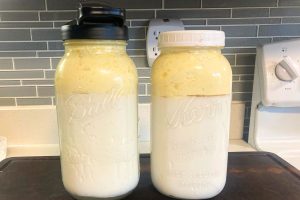
Besides breaking down defense chemicals which permits the absorption of more nutrients, lacto-fermentation also generates trillions of beneficial bacteria. That beneficial bacteria lines the digestive tract and has been shown to aid with a variety of health conditions including autoimmune disorders, IBD, IBS, strengthening the immune system, and inflammatory conditions. For example, the fermented dairy product kefir contains up to 30 different strains of bacteria, 1.5 trillion beneficial bacteria. That’s 100x more than any probiotic supplement!
What Vegetables Are Best For Fermented Pickling?
Cucumbers are the obvious choice for pickling, and they are a great choice. However, there are a number of other vegetables that can be fermented. Some of our favorites are beets, kohlrabi, carrots, radishes, and cabbages. Other options include asparagus, green beans, snap peas, onions, zucchini, and squash. You can also lacto-ferment fruits to help preserve large quantities from the garden or when you get them on sale at the store or farmer’s market.
What Ingredients Are Needed For Fermented Pickling?
Vegetables are the most popular type of lacto-fermented food. They are easy to make and help to preserve the freshness of your vegetables for several months rather than the few days they would last fresh straight from the garden or store.
There are two key ingredients when fermenting vegetables. They are as simple as salt and water. You can ferment any vegetable with these two ingredients.
All you need to do is mix a solution of salt and water and pour it over veggies chopped up and placed in a mason jar. I use a ratio of 3 cups of water to 1 tablespoon of salt for the saline solution. You can also use whey to lacto ferment. For this process, use 1/4 cup whey, 1 tsp of salt and fill the rest of the rest of a quart jar with filtered water to cover the vegetables.
Once you have your saline solution, you can add whatever flavors you like based on what vegetables you are fermenting. Dill is obviously a great option when making pickles. The possibilities are endless, and it can be fun to play around with different flavor combinations. Other common flavors that are used with vegetable fermenting include:
- Vinegar
- Onion
- Honey
- Ginger
- Garlic
- Pepper
- Bay Leaf
- Caraway
- Coriander
- Herbs
How Long Do Fermented Pickled Vegetables Last?
Fermented vegetables will last for up to 6 months in the fridge. This will help preserve your garden harvest to be enjoyed for a long time. Rather than eating it every night until you’re tired of the same veggies from your garden, you will be able to have them over the course of many months. Not only will you have summer garden freshness during this time, but you will also enjoy all the nutrients for an extended period of time as well!
How To Make Lacto Fermented Pickled Vegetables
Ingredients:
- 4 cups Vegetables (or enough to fill two quart-sized jars depending on the size of the vegetables)
- 3 cups Filtered Water
- 1 Tbsp Salt
- 2 Bay Leaves
- 6 Peppercorns
- 2 Cloves Garlic
- Note: If using whey, use 1/4 cup of whey, 1 tsp of salt, and top off with filtered water per quart jar. This is a substitute for the water and salt combination
Instructions:
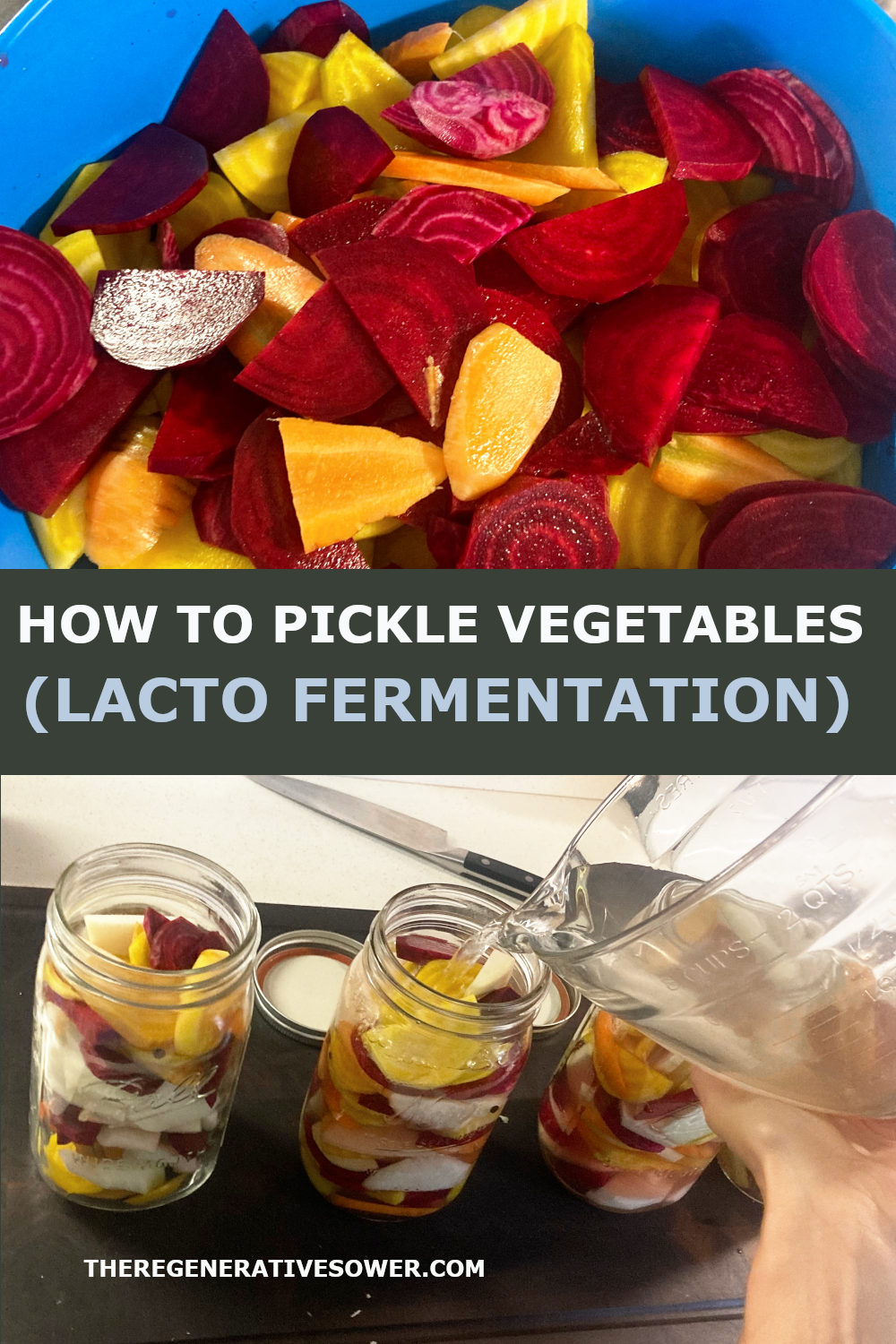
- Slice vegetables into preferred size and place into two quart-sized jars along with 1 bay leaf, 1 garlic clove and 3 peppercorns in each jar. My favorite vegetable combination is beets, kohlrabi, and carrots, but whatever you have will work great!
- Stir salt into water until it is completely dissolved.
- Pour saline solution over the vegetables until they are completely submerged. Add a fermentation weight if necessary to keep them submerged. If the vegetables are not submerged, they will be more likely to mold. Note: If mold develops, it is perfectly fine to scoop the mold off the top along with any affected vegetables and continue fermenting.
- Tighten lid and let sit in a warm spot for 1 week. You can “burp” or open the lid although I would recommend you don’t in order to allow more carbon dioxide to build which aids in the fermentation process.
- After 1 week, remove fermentation weight and store in fridge for up to 6 months.
- This will yield 2 quart jars of fermented vegetables!





Leave a Reply